
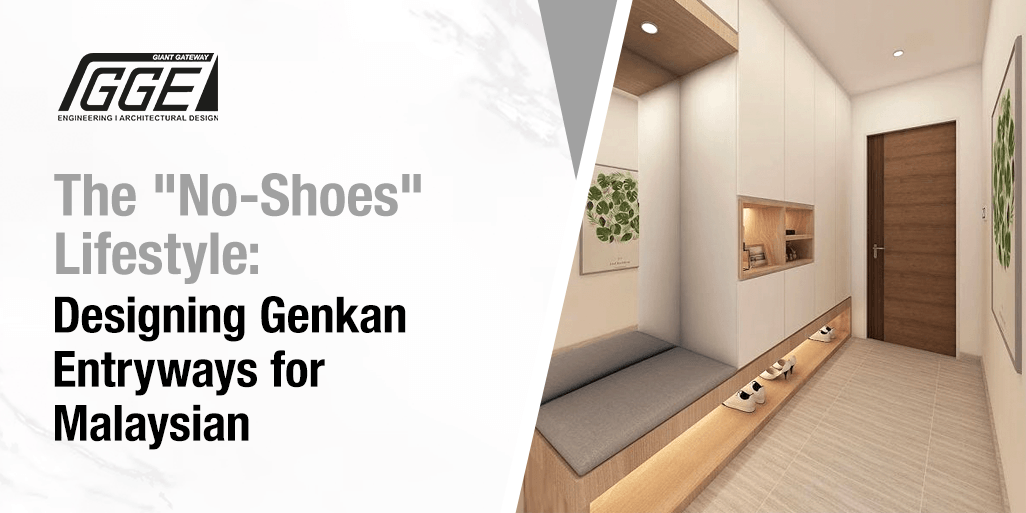
In the tropical humidity of Kuala Lumpur, the transition from the “outside” world to the “inside” sanctuary is more than just a cultural habit—it’s a physical necessity. We’ve all experienced it: the sudden relief of air conditioning after a sweltering afternoon in Bangsar, the frantic umbrella-shaking during a 4:00 PM monsoon downpour, and the immediate urge to shed the day’s grime at the front door.
While the “no-shoes” rule is a standard across Malaysian households, we often lack the architectural infrastructure to make this transition seamless. Most foyers are an afterthought, a cluttered pile of sneakers and sandals competing for space on a generic rug. This is where the Japanese concept of the Genkan (玄関) offers a transformative solution. A Genkan isn’t just a hallway; it is a meticulously engineered “airlock” that keeps the humidity, dirt, and stress of the Malaysian outdoors exactly where they belong—outside.
The Anatomy of a Malaysian Genkan
The magic of a Genkan lies in its structural separation. Traditionally, it features a tataki (the lower entrance floor) and a shiki-dai (the raised wooden step) that leads into the main living area. In the context of Japanese interior design in Malaysia, this elevation change serves a dual purpose: it acts as a physical barrier against dust and provides a psychological “reset” as you step up into your clean, inner sanctum.
For high-density urban apartments in areas like Mont Kiara, where space is a premium, even a 5cm elevation change can redefine the flow of a home. It clearly demarcates where “outside” ends and “home” begins, ensuring that the moisture tracked in from a rainy afternoon doesn’t migrate onto your expensive timber flooring or rugs.
| Feature | Function in Malaysia | Recommended Material |
| Sunken Floor (Tataki) | Traps dirt, water, and sand | Non-slip slate, stone, or textured tile |
| The Elevated Step | Prevents dust migration; defines the “clean zone” | Treated Oak, Merbau, or Polished Concrete |
| Getabako (Shoe Cabinet) | Concealed, ventilated storage | Custom joinery with slatted or breathable doors |
| Integrated Seating | Accessibility for the elderly or young children | Built-in timber bench with lower storage |
Defeating the Humidity: Hidden Storage with a Breath
In our climate, moisture is the enemy of leather and fabric. Storing shoes in a closed, airtight cabinet is a recipe for mould and unpleasant odours. A true Japanese restaurant interior design or high-end home foyer uses getabako (shoe cupboards) designed with ventilation in mind.
Think slatted “shoji” style doors or recessed vents that allow air to circulate. By incorporating subtle, low-voltage fans or dehumidifying crystals within the cabinetry, you ensure your footwear stays dry and pristine. In 2026, we are even seeing smart UV-C sterilisation lights integrated into these cabinets to eliminate bacteria tracked in from public spaces.
Materiality: Choosing Stone that Handles the Wet
When designing a Genkan for a Malaysian terrace or condo, the choice of the tataki material is critical. It must be non-slip (to handle the rain) and non-porous (to handle the mud).
Natural slate or textured porcelain tiles are the preferred choices for a modern Japanese interior design aesthetic in Malaysia. They offer a grounded, earthy feel that contrasts beautifully with the warm wood of the interior. These materials are incredibly durable and can be hosed down or easily mopped, making the “chore” of cleaning the entryway almost effortless.
Statistics from the Global Shoe Storage Market Report 2026 show that Asia Pacific continues to dominate the home organisation sector, with a growing 7.0% CAGR in premium shoe cabinet solutions. This reflects a broader shift toward “organised living” as a way to combat the chaos of urban density.
The “Ma” of the Entryway: Creating Breathing Room
In Japanese philosophy, Ma refers to the “pure space” or the gap. A Genkan should never feel cramped. By using built-in, floor-to-ceiling cabinetry that sits flush with the walls, you maintain a sense of openness.
Adding a mirror on one wall can double the perceived light, while a small “altar” or shelf for a single Ikebana (flower arrangement) or a ceramic bowl for keys adds a touch of intentionality. It says that this home is managed with care. For those undertaking a full renovation, ensuring that these heavy stone floors and custom cabinetry are structurally integrated into your home’s layout is essential. This is where the expertise of a Japanese contractor in Malaysia becomes a game-changer.
Executing a flawless Genkan requires a deep understanding of load-bearing structures and moisture-proofing, especially when introducing elevation changes to an existing floor plan. This technical precision is a core strength of GGE Design Studio, where the beauty of Japanese design is always backed by world-class engineering.
Lighting the Path: Subtle and Warm
The lighting in a Genkan should be a “soft welcome.” Avoid harsh overhead downlights that make the space feel like a clinical clinic. Instead, use recessed LED strips at the base of the shiki-dai (the step). This creates a “floating” effect that makes the entryway feel larger and guides the eye toward the interior.
Pair this with a warm, low-wattage pendant or a wall sconce that highlights the texture of your chosen stone. This layered lighting approach is a hallmark of sophisticated restaurant interior design projects in Malaysia, where the goal is to make the guest feel instantly at ease and “away” from the city’s frantic pace.
Psychological Benefits: The Clean Home, Clean Mind
The act of removing shoes is more than just about hygiene; it’s a ritual of shedding the day’s burden. Research into “Healthy Home Environments” in Malaysia suggests that better structural quality and cleanliness in a home are directly correlated with lower levels of anxiety and higher life satisfaction (Source: AIP Publishing).
A dedicated Genkan enforces this ritual. It prevents the “outside” from leaking into your “inside” world. When the floor under your bare feet is always clean, and the air is free from the smell of damp shoes, your home becomes a true sanctuary. It’s an investment in your mental well-being that starts the moment you turn the key.
Adapting the Genkan for Multi-Generational Living
In Malaysia, we often live with our elders. A traditional sunken Genkan can pose a tripping hazard if not designed correctly. The solution is the “Universal Design” Genkan—using contrasting colours for the step to increase visibility and adding a sleek, minimalist timber handrail that blends into the wall.
An integrated bench is also a must-have. It provides a stable place for seniors to sit while putting on their shoes, and it can double as a landing pad for groceries or heavy bags. This fusion of tradition and accessibility is what makes the modern japanese interior design malaysia movement so relevant for our local culture.
Bringing these complex, multi-functional foyers to life—especially in older Malaysian homes that require structural modification—demands a high level of technical mastery. The team at GGE Design Studio provides the foundational engineering and architectural expertise needed to ensure your Genkan is both a stunning design statement and a safe, durable part of your home’s structure.
The Final Touch: Scent and Sound
The final layer of a perfect Genkan is sensory. Consider a small, hidden diffuser with hints of Hinoki (cypress) or Sandalwood to greet you at the door. If your Genkan is on a landed property, a small water feature or a gravel “dry garden” just outside the door can provide a soothing soundtrack to your arrival.
By focusing on these small, intentional details, you turn a mundane task into a moment of mindfulness. You aren’t just taking off your shoes; you are coming home.
Frequently Asked Questions
- Is a Genkan possible in a small condo?
Yes! While you may not be able to lower the floor, you can create a “visual Genkan” by using a different flooring material (like stone tiles) for the first 1-2 meters of the entryway and installing a slim, built-in shoe cabinet that defines the space.
- How do I prevent the shoe cabinet from smelling in the Malaysian heat?
Ventilation is key. Choose slatted doors or add small air vents at the back of the cabinet. Using natural charcoal bags or cedar wood blocks inside the cabinet can also help absorb moisture and odours effectively.
- What is the ideal height for the Genkan step?
A standard step is usually between 10cm to 15cm. However, for a “Universal Design” that is safe for all ages, a lower step of 5cm to 10cm with a contrasting edge is often recommended.
- Can a Genkan work with a “Western” style home?
Absolutely. The principles of a clean, organised entryway are universal. You can use modern, minimalist materials that match your existing decor while still benefiting from the functional layout of a Japanese Genkan.

Engineering Your Sanctuary
The journey to a more peaceful, organised life begins at your front door. The Japanese Genkan is more than just a floor plan; it is a philosophy of respect for the home and a commitment to cleanliness that perfectly suits the Malaysian way of life.
At GGE Design Studio, we believe that every detail of your home should serve a purpose. We specialise in merging the timeless beauty of Japanese aesthetics with the structural rigour required for the Malaysian climate. Whether you are looking to transform your urban apartment or design a sprawling landed estate, we have the tools and the talent to make it happen.
Ready to leave the world’s clutter at the door? Visit GGE Design Studio to explore our portfolio of Zen-inspired transformations across Malaysia. Our team is ready to help you engineer a space that breathes, restores, and welcomes you back every single day. Connect with GGE Design Studio today to start your home’s new chapter.